


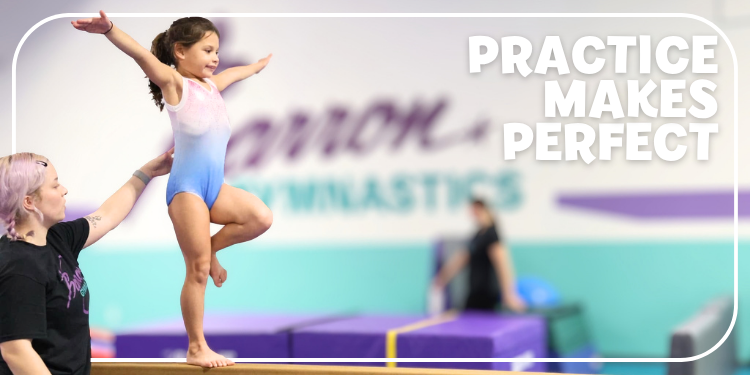
There is a moment every gymnastics and dance parent recognizes. It happens somewhere around week three or four. Your kid walks into class a little more confident than they did the week before. Maybe they nail a turn they had been struggling with. Maybe they finally stop second-guessing where their feet are supposed to go. It is a small thing, but you notice it. And so do they.
That moment does not come from talent. It comes from showing up.
“Practice makes perfect” is one of those phrases that gets said so often it stops meaning anything. But in gymnastics and dance, it is not a cliche. It is literally the method. The way a skill is built in these disciplines is through repetition, feedback, and more repetition. There is no shortcut, and honestly, that is kind of the point.
Why Repetition Works
When a child learns a new gymnastics skill or a new dance combination, their brain and body are building a connection from scratch. The first time through, they are thinking about every single piece of it. Where are my arms? Where are my feet? What comes next? It is overwhelming, and that is normal.
But the more they practice, the less conscious effort it takes. The movement starts to feel natural. Coaches call this muscle memory, but what it really means is that their body has learned to trust itself. That trust is what allows them to perform under pressure, to handle a recital or a meet, to take on harder skills when the time comes.
This is why consistency in class matters as much as it does. Missing a week here and there is part of life, but the kids who build the fastest are the ones who show up regularly, not because they are more talented, but because they are giving their brain and body more chances to make that connection.
What It Looks Like in Gymnastics vs. Dance
The principle is the same across both disciplines, but the way it shows up looks a little different.
In gymnastics, progress tends to be milestone-driven. There are specific skills your child is working toward, and each one builds on the last. A cartwheel becomes a back walkover. A back walkover opens the door to something more advanced. Every class is laying a brick, and those bricks only stack if the foundation underneath them is solid.
In dance, the progress feels more layered. Your child might work on the same combination for weeks, and each week they are adding something: sharper arms, better timing, more intention in their facial expression. The final product looks completely different from the first attempt, even when the steps themselves are the same. That transformation happens in the practice, not in the performance.
Both paths teach kids something bigger than gymnastics or dance. They learn that hard things get easier when you commit to them. They learn that progress is not always visible week to week, but it is always happening. And they learn what it feels like to earn something.
The Role of Focused Practice
Regular class builds the foundation. But there are moments when a focused, intentional deep dive can unlock a skill that has been sitting just out of reach.
Sometimes a kid has been working toward something for weeks and just needs a little extra time with it, a different angle, a coach who can slow things down and really break it apart. That kind of focused work can do in a single afternoon what months of regular class sometimes cannot.
At Barron, we offer specialty clinics throughout the year designed exactly for that. They are not replacements for class. They are accelerators. A chance to zero in on one thing and come back to your regular class feeling a little more ready.
Whether your child is working toward their first big gymnastics skill or trying to clean up a dance combination before recital season, there is a clinic on the calendar that fits where they are right now.
Because practice makes perfect. And a little extra practice? That makes it happen faster.